
What Types of Lessons are Available?
Big Dude’s Music City offers private instruction for vocals, guitar, bass, and drums. We offer lessons for all types of players; beginner, intermediate, professional, or just for fun. The type of lesson you receive will depend upon your interests, your level, and your willingness to learn. We find that the more you put into your lessons, the more you will get out of them.
What is Included?
Each lesson is 30 minutes in length.
They are private lessons given in our lesson studios here at our store.
Rates
Lessons start at $25 per half-hour, and up. See the individual teacher’s profile for pricing information.
Meet the Instructors
John White / Guitar
Dustin Mott / Drums & Percussion
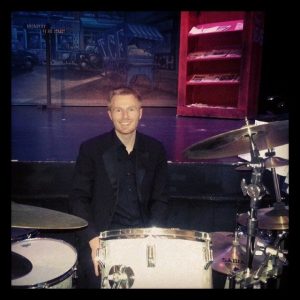
Dustin Mott has a bachelor’s of science degree in music education, a bachelor of arts in music with a percussion performance emphasis, and is currently working toward his master’s degree in music education from the University of Missouri-Kansas City. Dustin has taught at Big Dude’s Music City for seven years and keeps a consistent studio of 20 – 30 students throughout the year. Besides teaching at Big Dude’s Music City his other positions consist teaching percussion at high schools, middle schools, charter schools, and private schools area the Kansas City metro area.
Dustin Mott has played symphonic, chamber, concert band, marching band, drumline, bebop, big band, Dixieland, reggae, country, blues, indie rock, punk rock, pop, and “Latin” styles of music. His previous teachers and mentors have been studying jazz, Dixieland, Cuban, and Brazilian styles with Doug Auwarter; timpani, concert snare drum, rudimental snare drum, mallets, and multi-percussion with John Currey, Dr. Dennis Rogers and Dr. Tracy Thomas; timpani with Dr. Nick Petrella; and rock with Kent Burnham.
If interested in drum set lessons or percussion lessons for middle school or high school percussion students please contact Big Dude’s Music City. Student ages accepted are Kindergarten through Adult and beginners through advanced.
Dustin D. Mott
Beginning Band Teacher at Visitation Catholic School
Percussion Instructor at Oak Park High School
Percussion Instructor at Big Dudes Music Store – Kansas City, Missouri
Percussion Instructor at The Tune Shop – Leavenworth, Kansas
Percussion Instructor at Alta Vista Charter School
Drumline Coach at Center High School
Drummer for various musicals around the Kansas City metro
Drummer for The Waldo Jazz Collective
Benjamin meade PHD / Rock The Spectrum-guitar
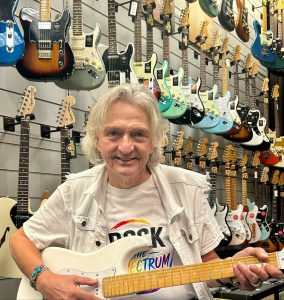
The son of a Baptist inner city minister (father) and a music teacher (mother), Benjamin Meade grew up in Kansas City, Missouri. At a young age he began immersing himself with music, movies, and readings on contemporary philosophy. He attended the Music Conservatory in Kansas City studying six years with the piano, guitar, and several woodwind instruments. He and his two brothers formed the musical ensemble “Tuck Point” when he was 15. An Eagle Scout, at the age of 17 he put himself through college by playing in several different rock bands and working at an auto repair shop while pursuing a degree in filmmaking at Central Missouri State University. After graduating in 1977, he met and worked with Stan Brakhage in Boulder, Colorado for several months learning experimental film technique and aesthetic. Soon after, he was offered an entry level job at Universal Pictures in Los Angeles but soon returned to the mid-west hoping for a film community to develop. Discouraged from lack of employment opportunities in the film industry where he lived, he took a job as a financial services consultant with New England Financial and remained there for nearly three decades. He became partner of the firm at age 28 while spending time studying interests from chiropractic to law and earned a masters degree in American History, then a Ph D in Film and Theatre from the University of Kansas in 1999. While at Kansas, he again met Stan Brakhage who worked with him in the development of many short experimental films. While presenting a paper in Denmark in 1999, he met Laszlo Tarnay of Pecs, Hungary who invited him to teach there the following year. While teaching, he met Hungarian Filmmaker Andras Suranyi and made the controversial but touching film Vakvagany (2002) in 2001 (acquired by the Sundance Channel). He completed Das Bus in 2003 (acquired by the Sundance Channel), and 2004 co-produced Confederate States of America, directed by Kevin Willmott which played at The Sundance Film Festival and was released by IFC Films. He then collaborated with crime novelist James Ellroy on Bazaar Bizarre in 2005 (now re-released by Troma Entertainment) the story of serial killer Bob Berdella. His film American Stag (2006) was an interrogation of early American Pornography. This was followed by the critically acclaimed American Music: Off The Record (2008) featuring Noam Chomsky, Jackson Brown and Douglas Rushkoff along with more than 50 music acts including Les Paul, Ray Price, and Wanda Jackson. He followed this with The Elders: Alive and Live in Ireland (2008), a rock and roll music epic, then completed Lifelong Roadtrip, a film about the Nace Brothers Band in 2009. He then produced The Kansas City Murder Factory-Act 1 for Mike B. Rollen (2011), In 2012 he released a compilation of his shorts films made with Stan Brakhage and several others without collaboration as well as interviews with his icons Ray Harryhausen, Tom Savini, Stan Brakhage, William S. Burroughs, and Lars Von Trier-to name a few. The title of the compilation is “Mentallusions: Radical Eclectic Films of Benjamin Meade”. In 2012 his book “Experimental Film: The Missing Frames” was published. In 2012 he shot a film in Haiti entitled “Optimistic Chaos”, which chronicles he and singer/songwriter Danny Cox as they experienced the poverty and lawlessness in the Northwest part of the island. It was released in 2013. In 2015 he released Woke Up This Mornin’ in the Arkansas Delta, a gonzo style film that chronicles his travels in the Arkansas Delta from 2009-2014. His work is referred to by critics as “experimental documentary”. In 2014 he then turned to music recording with an “analogue” set of four (4) instrumental tunes with members of the world renowned Alloy Orchestra, Roger C. MIller (also of Mission of Burma), Ken Winokur and Terry Donahue. The music was a synthesis of experimental/avant-garde/junk percussion/electronic under the name “Town Topics” on the Cosmic Cowboy Music label. That same year he produced the only solo concert performed by Roye Albrighton, the front man for the legendary rock band “Nektar” releasing the recording in 2015 on his C C S label. From 2015 to current he continued to produce films for new filmmakers in Missouri and Arkansas. In 2017, he completed the hand painted camera-less 16mm film- Laughing Crying Blues, (a tribute to Stan Brakhage). He is a co-founder of the Kansas International Film Festival and former chairman of the Hot Springs Documentary Film Institute. Outside of the arts Meade founded Casas Por Cristo, a missions organization that builds homes for the poor in Juarez, Mexico. He is a retired Professor of Film and Digital Media at Avila University in Kansas City, Missouri. He is a fellow at the Society of the Cognitive Studies of the Moving Image in Copenhagen, Denmark, and a professor of film at Janus Pannonius University at Pecs” Hungary. He is the owner of Cosmic Cowboy Studio in Westwood, Kansas-an analogue facility for group, solo, and film soundtrack recording and film and video production. His film company is Corticrawl Productions. In 2019 he founded Cosmic Cowboy Records, LLC a record label dedicated to showcasing marginalized musicians and new talent as well as re-issuing out of print material in demand. He completed”Cate Bros” Arkansas Rock & Soul Royalty in 2023. Current projects include “Fine Arts Theatre” (working title) the story of Ben and Brian Mossman and their theaters and love for them and “P K-The True Story of a Preachers Kid.”He resides in Westwood, Kansas (off of the Plaza in Kansas City-
Advantages of Guitar Lessons for Children with Special Needs: Dr. Benjamin Meade
Guitar lessons can be a powerful, inclusive tool for children with special needs, offering benefits that extend far beyond music skills
1. Adaptable Learning Styles
Guitar instruction can be tailored to visual, kinesthetic, or auditory learners. For example, children with autism may thrive on pattern recognition and visual cues, while those with ADHD may benefit from rhythmic, repetitive play
Adaptive teaching methods—such as pacing adjustments, simplified chord shapes, or color-coded diagrams—help each child succeed at their own pace
2. Sensory-Friendly Engagement
For neurodiverse learners, the guitar’s visual and tactile nature provides clear cause-and-effect feedback (pluck a string, hear a sound). This predictability can be comforting and engaging, especially for children with sensory processing differences. Tools like Chord-Buddy allow students to press color-coded buttons to play chords, making learning accessible even with physical or cognitive challenges
3. Motor and Cognitive Development
Playing guitar strengthens fine motor skills, posture, and coordination. Chord transitions and strumming patterns can improve memory sequencing and attention span. For children with physical disabilities, adaptive guitars (½, ¾, full sizes) and modifications (custom picks, attachments) make playing possible
4. Emotional Regulation and Self-Expression
Rhythmic strumming and chord changes can act as self-regulation tools, helping manage anxiety or sensory overload. Music becomes a non-verbal outlet for emotions, boosting self-esteem through achievable mastery
5. Communication and Social Skills
While some children may prefer independent play, group practice can foster social interaction and musical collaboration. Teachers balance structured group time with individual pacing to meet diverse needs
6. Therapeutic and Cultural Value
Guitar lessons can be integrated into music therapy for autism, Down syndrome, and other conditions, supporting emotional, cognitive, and motor goals. The instrument’s versatility across various musical genres also connects children to familiar cultural music, increasing motivation
7. Confidence and Joy
Early success in simple songs builds confidence. The immediate feedback of sound encourages persistence, and the joy of making music can be a lifelong source of happiness
In summary: Guitar lessons for special needs children offer a flexible, sensory-friendly, and therapeutic way to develop motor skills, cognitive abilities, emotional regulation, and self-expression. With adaptive teaching and supportive tools, the guitar can be a bridge to confidence, connection, and lifelong enjoyment.
Megan Darley/ Vocals
Music Lessons Info Request
Contact Big Dude’s for more information on music lessons.